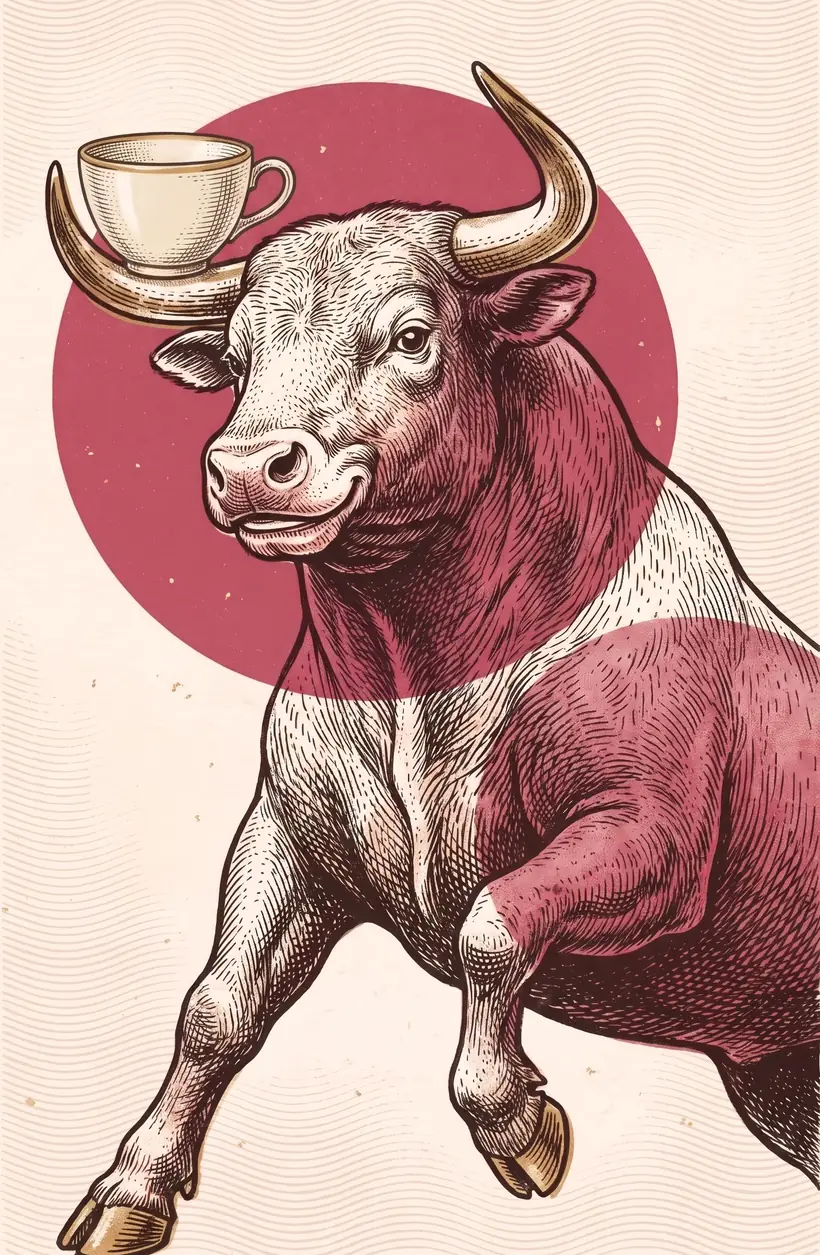
Your money animal
The Bull
Overconfident Investor
The Roast
You don't have a portfolio. You have a group chat and a feeling.
The pattern
Confidence isn't edge; chasing what already ran usually means buying the top. Excitement and returns are, annoyingly, uncorrelated.
Line Items
The group chat said it's time.
The Move
Split the brain: keep a small “fun money” sleeve for bets, automate the boring index majority.
No email needed — they have to guess yours first.
The Weekly Receipt · First Edition · Nº 10 / 12
The Appraisal · epic · Nº 10
The Bull
Overconfident Investor
If you chase whatever investment is going up, The Weekly Receipt calls you the Bull. YOLOs into whatever's mooning, calls it strategy.
You don't have a portfolio. You have a group chat and a feeling.
Exhibit 01
The pattern underneath
Confidence isn't edge; chasing what already ran usually means buying the top. Excitement and returns are, annoyingly, uncorrelated.
Exhibit 02
Why conviction isn’t edge
The feeling of certainty and the actual quality of an investment decision are two entirely different things that your brain stubbornly insists on treating as one and the same. Confidence is an emotion manufactured inside you; edge is information the wider market doesn't already have and hasn't already priced in. Buying the thing that's already mooning feels exactly like conviction — but by the time something has run far enough to feel like an obvious, can't-miss winner, its recent run is genuinely the least secret fact about it. Everyone else is staring at the identical chart you are.
What's actually doing the steering here is recency bias: the mind quietly over-weights whatever just happened and, almost without asking permission, assumes it will simply keep happening. So a hot streak reads as a durable trend you can comfortably ride rather than a price that has already done most of its moving, and "it's been going up lately" becomes, without you ever consciously deciding it, "it will obviously keep going up." That's the real machinery underneath chasing — it isn't greed, exactly, just a very normal brain placing far too much trust in the most recent data point it happened to be handed.
The genuinely costly part is that chasing tends to quietly invert good timing. Excitement reliably peaks after the big run, which is to say near the top, and dread reliably peaks after the sharp drop, which is to say near the bottom — so the emotional cycle keeps nudging you to buy high and sell low, the precise reverse of the plan you'd write down in a calm moment. Each individual move feels responsive, alert, and smart in the instant you make it; stacked up across years, they quietly drain a real slice of what patient money left alone in the very same holdings would have made.
That drain isn't hypothetical or moralizing — it's measurable, and it's the strongest argument going against trusting the excitement. Large studies of how investors actually behave find the average dollar trails the very funds it's invested in by more than a full point a year, and not because the underlying picks were bad — because the buying and the selling were mistimed. Worse, the more people traded in and out, the wider that gap reliably grew. The frantic activity that feels like staying on top of your money is often the exact thing quietly working against your result.
None of this is an argument to sit the market out — actually being in it is a genuine strength, and that healthy appetite for risk is well worth keeping hold of. It's an argument for cleanly separating the fun from the foundation. Keep a small, deliberately capped sleeve where conviction gets to play and the stakes stay firmly contained, and let the boring majority quietly ride a plain, automatic index fund (a low-cost basket of the whole market) that no group chat gets to steer. And write your thesis down before you buy, so that later you can honestly tell a real skill apart from a lucky guess.
The number to know
1.2 pts/yr
Over the ten years to December 2024 the average invested dollar earned 7.0% a year — about 1.2 percentage points less than the 8.2% the same funds delivered — a gap driven by the timing and size of investors’ trades, and the more they traded, the wider it got.
Exhibit 03
What the Bull gets right
Exhibit 04
Your next moves
- Split the brain: keep a small “fun money” sleeve for bets, automate the boring index majority.
- Write down your thesis before you buy — so future you can tell skill from luck.
This is the general read
Want your version — your real score spectrum, your primary + shadow blend, and the tension your own answers reveal? That takes two minutes.
Questions people ask about the Bull
- Why do I chase whatever investment is going up?
- Confidence isn't edge; chasing what already ran usually means buying the top. Excitement and returns are, annoyingly, uncorrelated.
- Is being the Bull a bad thing?
- No — it's a pattern, not a verdict. Bulls tend to be not scared of investing, decisive, actually in the market. The goal isn't to stop being you; it's to manage the one habit that quietly costs you.
- How do I work on being the Bull?
- Split the brain: keep a small “fun money” sleeve for bets, automate the boring index majority. Write down your thesis before you buy — so future you can tell skill from luck.
Guides for the Bull
Meet more money animals
Just so we’re clear: The Weekly Receipt is financial education and entertainment, not personalized financial, investment, tax, or legal advice. Your money animal is a fun framework, not a diagnosis. This read and its cited number were reviewed by The Weekly Receipt.