Your money animal
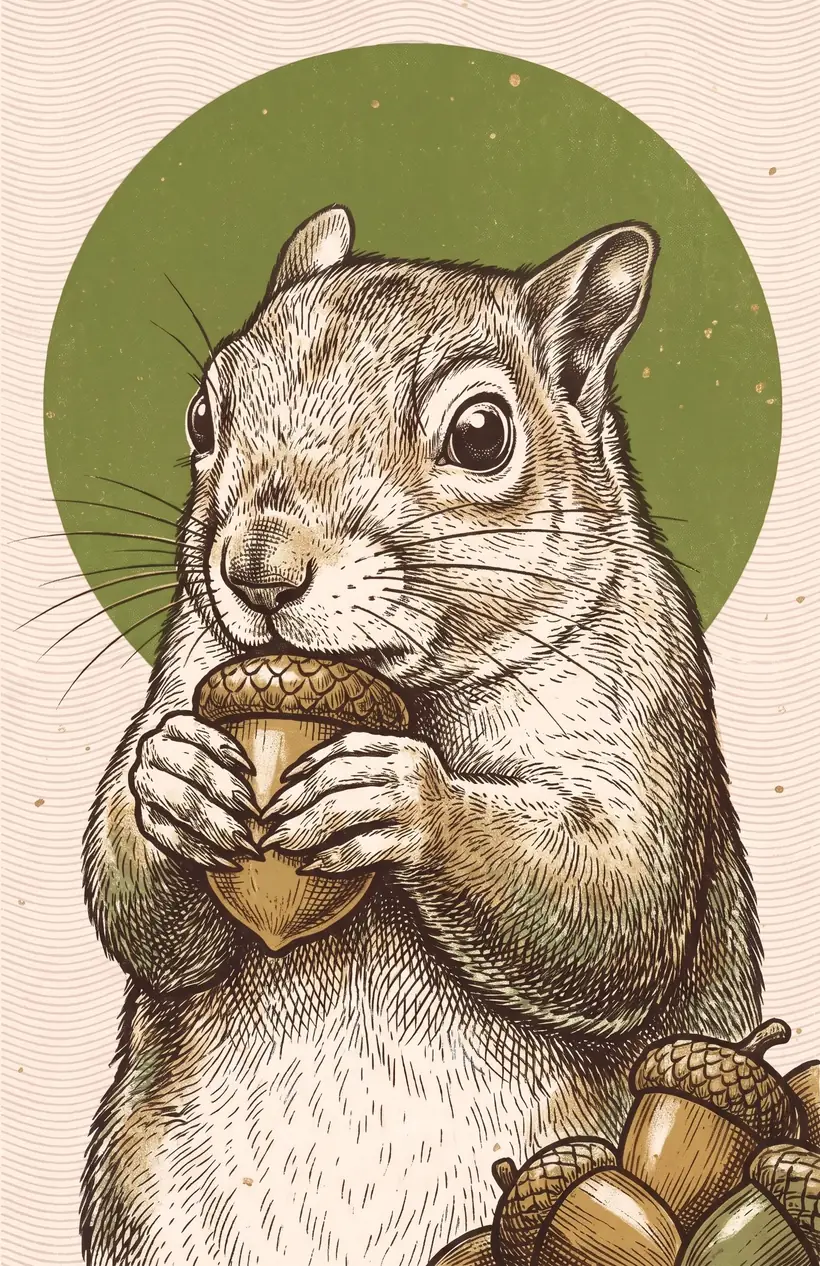
The Squirrel
Anxious Over-Saver
The Roast
You have savings. You also have a low-grade fear that opening a nice bottle of anything will end civilization.
The pattern
Over-saving from anxiety is still anxiety running the show; scarcity mindset can cost you joy and growth — idle cash quietly loses to inflation. You've already nailed the hard part; what's left is letting yourself enjoy some and letting the rest grow.
Line Items
Every acorn counted, none enjoyed.
The Move
Set a guilt-free “Squirrel Fund” — a small automatic monthly amount you're allowed to spend on joy, no justification.
No email needed — they have to guess yours first.
The Weekly Receipt · First Edition · Nº 06 / 12
The Appraisal · rare · Nº 06
The Squirrel
Anxious Over-Saver
If you feel afraid to spend the money you've saved, The Weekly Receipt calls you the Squirrel. Hoards, checks constantly, never actually enjoys it.
You have savings. You also have a low-grade fear that opening a nice bottle of anything will end civilization.
A pattern, not a verdict — and if this is survival right now, not habit, the roast isn’t for you; the next step still is.
Exhibit 01
The pattern underneath
Over-saving from anxiety is still anxiety running the show; scarcity mindset can cost you joy and growth — idle cash quietly loses to inflation. You've already nailed the hard part; what's left is letting yourself enjoy some and letting the rest grow.
Exhibit 02
Why the vault never opens
Over-saving looks like the exact opposite of a money problem, which is precisely why it hides so well — but anxiety is still the thing running the show, it's just wearing a very responsible-looking outfit. The saving isn't flowing from a calm, considered plan; it's flowing from a low, permanent hum of "what if," and each new top-up buys a few minutes of quiet from that hum. You've genuinely mastered the hard part that trips most people up. What's left undone is the part nobody warned you about: letting any of it actually get used.
The engine underneath is a scarcity mindset — when the fear of not-enough is loud enough, no number ever reads as enough, because the number was never really the point. The reassurance was. So the balance climbs and the underlying unease refuses to move an inch, since a bigger cushion simply cannot fix a feeling that was never actually about the cushion's size in the first place. That's the loop that keeps the vault steadily growing and permanently, reflexively shut, no matter how genuinely healthy the total would look to anyone standing outside it.
Meanwhile the caution carries a hidden price tag, and it's the one you can't watch happening. Cash that just sits there doesn't hold perfectly still — inflation quietly trims what each dollar can buy, year after year, so "totally safe" is slowly getting smaller in real terms even while the number on the screen sits reassuringly unchanged. Money kept perfectly motionless to dodge one visible risk is silently accepting a different, quieter one — and it happens to be the single loss you could most reliably have seen coming. The guilt that flares on the rare occasions you do spend is the same engine backfiring: the vault got so welded to safety that opening it, even for something planned, reads to your nervous system as danger.
The most striking part is just how long that vault can stay closed. Research following people all the way through retirement finds a large share reach their mid-eighties still holding essentially everything they started with — a whole lifetime of careful, disciplined saving, and the money largely never got spent on the very life it was quietly being saved for. It's a sobering reminder that a fund saved and then never deployed didn't actually buy security; it mostly just postponed it, gently and indefinitely, into a someday that keeps receding.
None of this is an argument to spend recklessly — your instincts are a genuine asset, not a bug to be squashed. It's that the unfinished skill isn't saving more; it's letting the money do its two real jobs: buy you some actual joy now, and grow the rest instead of shrinking quietly in place. A small automatic amount you're allowed to enjoy with zero justification required, paired with a slice moved somewhere it can actually grow, together turn a hoard you stand guard over into a resource that finally starts working for you instead of the other way around.
The number to know
≈ one-third
About one-third of retirees still have 100% or more of their starting assets by their mid-80s — a lifetime of saving, and the vault mostly stays shut — so caution isn’t your gap; deploying the money is.
Exhibit 03
What the Squirrel gets right
Exhibit 04
Your next moves
- Set a guilt-free “Squirrel Fund” — a small automatic monthly amount you're allowed to spend on joy, no justification.
- Learn what idle cash costs you, then move the excess into something that grows.
This is the general read
Want your version — your real score spectrum, your primary + shadow blend, and the tension your own answers reveal? That takes two minutes.
Questions people ask about the Squirrel
- Why do I feel afraid to spend the money I've saved?
- Over-saving from anxiety is still anxiety running the show; scarcity mindset can cost you joy and growth — idle cash quietly loses to inflation. You've already nailed the hard part; what's left is letting yourself enjoy some and letting the rest grow.
- Is being the Squirrel a bad thing?
- No — it's a pattern, not a verdict. Squirrels tend to be disciplined, prepared, genuinely resilient. The goal isn't to stop being you; it's to manage the one habit that quietly costs you.
- How do I work on being the Squirrel?
- Set a guilt-free “Squirrel Fund” — a small automatic monthly amount you're allowed to spend on joy, no justification. Learn what idle cash costs you, then move the excess into something that grows.
Guides for the Squirrel
When saving turns into never spending
If you have savings but flinch every time you spend, you're not irresponsible — you're over-correcting. Spending less than you'd like is more common than overspending, and the fix is a small, named amount that's yours to enjoy on purpose.
Read the guideChecking your bank account (again): the reassurance trap
Compulsive balance-checking is the mirror image of never looking: both are anxiety management. Each check buys a minute of relief, teaches your brain the number is a threat, and the worry comes back louder. One scheduled look beats twelve anxious ones.
Read the guideMeet more money animals
Just so we’re clear: The Weekly Receipt is financial education and entertainment, not personalized financial, investment, tax, or legal advice. Your money animal is a fun framework, not a diagnosis. This read and its cited number were reviewed by The Weekly Receipt.